

Working with industry

We develop AI for chemical process design, engineering and operation together with industry partners.

We develop methods in machine learning, optimization and process systems engineering, and apply them to chemical process design, engineering and operation. To make the research useful in practice, we work closely with industry: partners bring practical problems, data and engineering expertise, and we bring new AI methods and the people who develop them.

Industrial partners can get involved in several ways, from a short exploratory project to a multi-year research project. Industrial funding is often combined with matching public grants, for example from NWO or the EU.

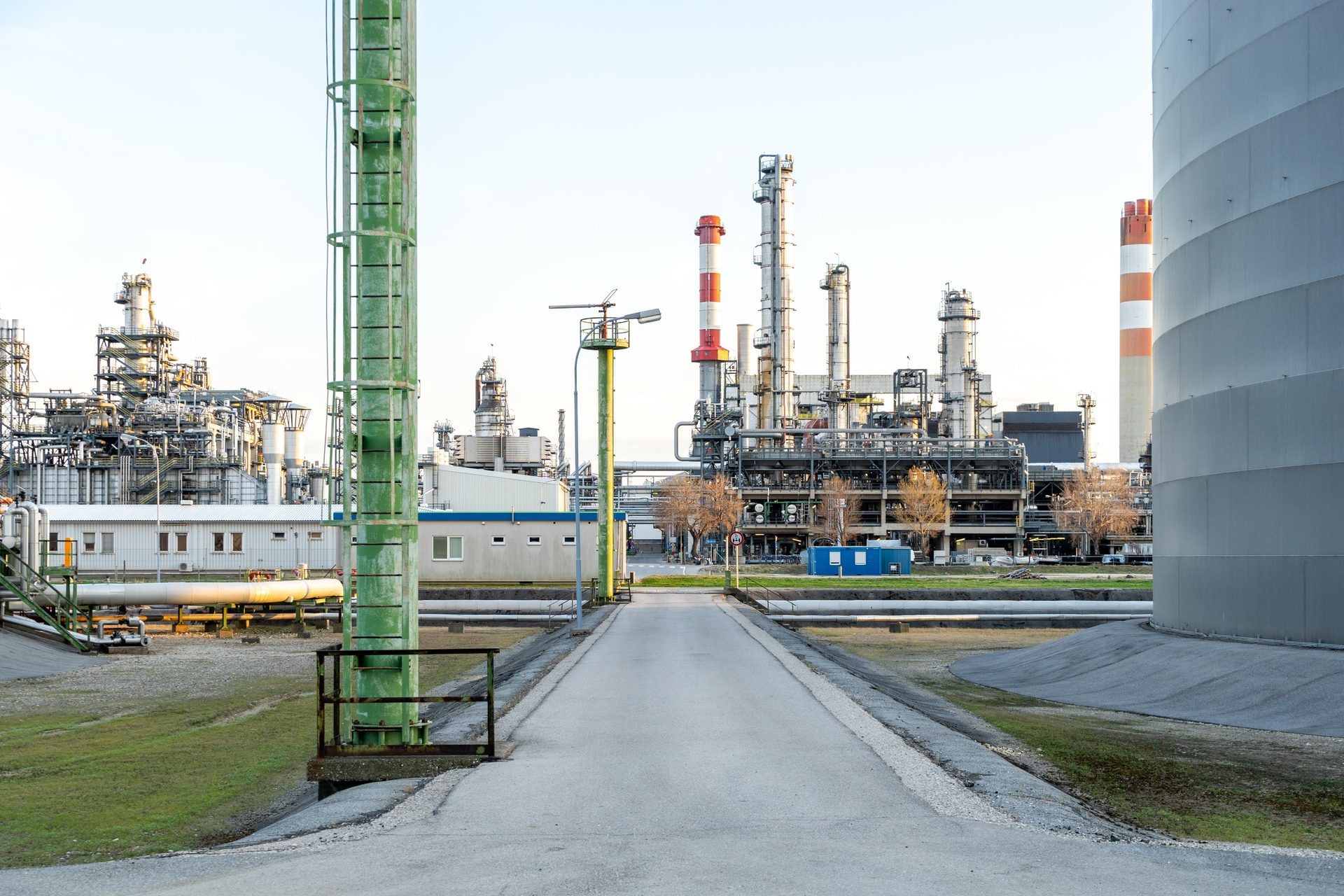
Chemical plant

Partners

We have collaborated with industry partners including Linde, Siemens, Shell, Danone and Fluor.

  • Linde
  • Siemens
  • Shell
  • Danone
  • Fluor

Case studies

With Linde and Siemens

P&ID Co-Pilot

Challenge
Developing piping and instrumentation diagrams (P&IDs) is a crucial and time-consuming step in process development. Engineers add control structures to process flow diagrams (PFDs) largely by hand.
Approach
Generative AI translates PFDs into P&IDs, in the same way as transformer models translate human language. Both diagram types are written as text strings in the SFILES 2.0 notation. Linde contributes process engineering expertise and Siemens software development expertise.
Result
The collaboration started in 2024. It builds on the group's earlier work, in which a transformer model predicted control structures with a top-5 accuracy of 89.2% on 100,000 generated P&IDs.
With Danone

Soft sensors for spray drying

Challenge
Powder quality attributes such as moisture content and tapped density cannot be measured inline in multistage spray dryers, and the dryer dynamics are hard to model from first principles alone.
Approach
The dryer is represented as a graph of unit operations and material streams, with sensor data placed where it is measured. A graph neural network combined with a transformer learns the process dynamics from long-term production data of an industrial spray dryer for infant formula.
Result
Early results show that topology awareness helps to predict process variables governed by mass and energy flows through the dryer. Related work appeared at ESCAPE-35 and the International Granulation Workshop (2025) and in Computers and Chemical Engineering (2026).
Platform developed from our research

DigiCo and Smart P&IDs

Challenge
Many P&IDs exist only as images or PDF files. Digitizing them by hand is slow and error-prone, and the information cannot be used by software or AI.
Approach
DigiCo started more than five years ago as a research project on AI-based digitization of engineering diagrams. It converts P&IDs into machine-readable Smart P&IDs that are stored in a knowledge graph and form the basis for generative AI such as ChatP&ID.
Result
Several hundred users signed up early. A team of software engineers is turning the research into industry-grade software; a first beta release is planned for January 2027. In the ChatP&ID study (AIChE Journal, 2026), graph representations improved accuracy by 18% compared with raw image input.

Ways to collaborate

  • Sponsored PhD or postdoc project

    A company funds a PhD candidate or postdoc who works on a research question of shared interest, in close exchange with the company's experts.

  • Co-funded research projects

    Industrial contributions can be combined with public funding, for example from NWO, TKI (Top Consortia for Knowledge and Innovation) or EU programs.

  • Early access to DigiCo

    Companies interested in Smart P&IDs can sign up for early access to the DigiCo prototype.

  • Workshops and training

    Talks, workshops and training on AI and machine learning in chemical engineering for engineering teams.

How we work

  • Start with a conversation

    Most collaborations start with an informal meeting about your challenge. We then define the scope, deliverables and timeline together.

  • Publication-oriented research

    We are a university group. Results of joint projects are published in journals and at conferences, and methods are released as open-source software where possible. Publication plans are agreed with partners in advance.

  • IP and confidentiality

    Intellectual property, confidentiality and the use of company data are set out in a contract agreement with TU Delft before a project starts.

Discuss a collaboration

We are happy to arrange a meeting and discuss how we can work together.

Artur M. SchweidtmannAssistant Professor, Department of Chemical Engineering, TU Delfta.schweidtmann@tudelft.nl